Polaris RZR & Ranger Electrical & Accessory Wiring Guide: Busbars, Battery, Switches & Street-Legal Kits
Adding lights, a winch, a stereo, or turn signals to your Polaris? Do it the right way — off a proper power hub, a battery that can carry the load, and fused, switched circuits. Here's how the electrical system works and the exact parts that power it.


Sooner or later every Polaris gets accessories — a light bar for night rides, a winch for the mud, whips, a stereo, USB chargers, or a full turn-signal-and-horn kit to make it street legal. And sooner or later, done the wrong way, those accessories cause problems: a battery that dies overnight, a rat’s nest of piggybacked wires at the battery post, a blown fuse nobody can find, or an electrical fire waiting to happen. Doing it right isn’t hard — it just means understanding the electrical system and powering accessories off a proper hub, with a battery that can carry the load and fused, switched circuits.
This guide walks the Polaris electrical system the way you’d actually build it: the battery that supplies the power, the busbar that distributes it, the switches that control it, the street-legal kit that’s the most common add-on, and how to diagnose it when the machine won’t start. Each section links the in-stock part on Amazon Powersports; for OEM parts by number, the eBay Motors buttons above search live listings.
How the Polaris electrical system works
From the battery out to your accessories, the system is simple once you see the chain:
- The battery stores power and delivers the big cranking current to start the engine.
- The engine’s stator/charging system recharges the battery and runs the machine while it’s running — but its output is finite, so a heavily accessorized machine can out-draw it.
- Factory circuits (lights, gauge, ECU, fuel pump, ignition) run through the fuse block.
- Many 2018-and-newer machines add a Pulse busbar — a dedicated accessory-power hub with keyed and always-on, individually fused circuits — so you never tap the battery directly.
- Each accessory runs from a fused circuit through a switch (and a relay for high-draw loads) to the light, winch, horn, or signal.
Every accessory you add is a load on that chain. Wire it into the fused hub, size the battery and wire to the load, switch it cleanly, and the system stays reliable. Skip those steps and you get dead batteries, blown fuses, and melted harnesses. Everything below is about doing it the reliable way.
The power hub → Polaris Pulse busbar
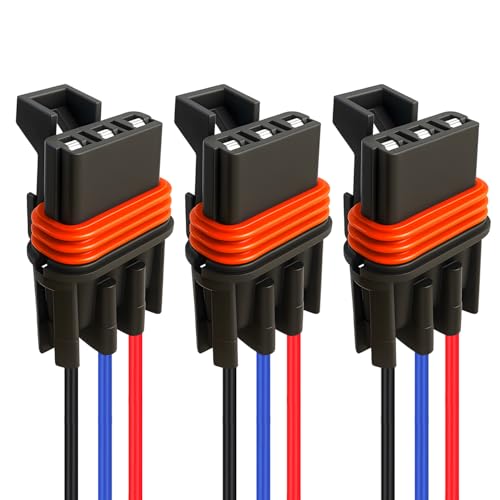
If you’re adding more than one accessory, start here. The Polaris Pulse busbar is the factory accessory-power distribution block — a fused hub that gives you clean keyed (switched with the ignition) and always-on circuits, so every light, whip, switch, and charger plugs into one organized place instead of piggybacking ring terminals onto the battery post. Many Ranger XP 1000, RZR, RS1, and General models from 2018 up come pre-wired for the Pulse system, so adding a busbar is often just plug-and-play.
A Pulse busbar / bus bar connector set plugs into the factory Pulse harness and breaks it out into usable, fused accessory circuits. The payoff is threefold: fused protection on every circuit (a chafed wire blows a fuse instead of melting the harness), keyed circuits so accessories can’t drain the battery with the machine off, and clean, serviceable wiring you can actually trace a year later. It is the single best first move for anyone building out a machine — do this before you hang the first light.
The power source → a battery that can carry the load
A lot of “electrical gremlins” are really just a battery problem. The stock battery on many Polaris models is sized for stock loads; hang a winch, a big light bar, a stereo, and heated grips off it and take short rides that never fully recharge, and it will struggle — slow cranking, dead-overnight, or an early death. Accessories also mean more vibration-loaded, deep-cycle-ish duty than a plain starting battery likes.
The fix is a battery built for the job. A heavy-duty AGM battery for accessorized vehicles (Polaris part 4081481) is fully sealed, leak-proof, and vibration-resistant — it charges faster and holds charge longer, which is exactly what a machine with extra loads and stop-start ride time needs. AGM construction tolerates the pounding a side-by-side dishes out far better than a conventional flooded battery, and sealed means no acid to spill when you’re at a hard angle. If your battery keeps dying after you added accessories, upgrading the battery — and putting always-on loads on a keyed circuit — is usually the cure. Keep it on a tender between rides and it’ll last years.
Street legal → turn signal & horn kit
The most common accessory project of all is making the machine road-legal, and the two hardest boxes to check are turn signals and a horn. A plug-and-play kit bundles both. A UTV turn signal kit with horn gives you blinkers, a flasher, a loud horn, and a rocker/switch in one harness that wires in without cutting into the factory loom — universal enough to fit Polaris, Can-Am, and Kawasaki machines.
That covers the signals and horn; to finish a street-legal build you’ll typically add mirrors, DOT lighting, a license-plate mount, and (in many states) a windshield, then register the machine where your state and county allow side-by-side road use. Confirm your local rules before you ride on the road — requirements vary a lot by state, and this is guidance, not legal advice. But the turn-signal-and-horn kit is the part of the job that used to mean splicing a dozen wires, now reduced to a plug-in harness.
Controlling it → switches
Every accessory needs a way to turn it on, and the switch you choose matters. Momentary switches (spring back to center) suit things like a winch, which you jog in and out; latching rocker switches suit lights and accessories you leave on. High-draw loads — a winch, a big light bar — should switch through a relay so the switch itself only carries a small trigger current while the relay handles the heavy load; that’s what keeps switches from burning up.
A common failure and upgrade point is the winch switch. A winch rocker switch — a 7-pin, 12/24V DPDT momentary in/out switch with jumper wires — replaces a worn or corroded factory switch, or adds winch control to a new install. Momentary is the right type for a winch: it powers the winch only while you hold it, and centers off the instant you let go. Mount switches where mud and water drain away from them, and a corroded switch is one of the first things to suspect when an accessory works intermittently.
When it won’t start → battery first, then ignition
Adding accessories makes electrical no-starts more likely, so know how to diagnose one. Work in order:
- Battery. Slow cranking, a single click, or a resting voltage well under 12.4V points at the battery. Load-test it, or try a known-good battery or a jump. A battery worn down by parasitic accessory draw is the #1 cause — see the battery section above.
- Fuses and interlocks. Check the fuse block and the busbar fuses, and don’t forget the kill switch and the seat-belt/park interlock — a machine that cranks but won’t run, or won’t crank at all, can be a tripped interlock or a blown fuse.
- Ignition. If the battery’s good and it cranks but won’t fire — or fires rough and misfires — move to the ignition system. A failed ignition coil, a fouled or worn spark plug, or a cracked plug cap/wire will give a no-start or a stumbling start. An ignition coil, spark plug & cap kit covers the common Sportsman, Ranger, and RZR ignition parts; pull the plug and check for spark while cranking to confirm before you swap. A weak coil is a common Polaris no-start once the battery is ruled out.
This is the electrical chapter of the broader common problems guide — here’s the deeper version for the accessorized machine.
Wiring best practices — do it once, do it right
Whatever you’re adding, these rules keep it safe and reliable:
- Fuse every circuit as close to the power source as practical, sized to the wire. The fuse protects the wiring — a chafed wire shorts to the frame and blows the fuse instead of melting the harness. This is the whole argument for a fused busbar.
- Match wire gauge to the load. Bigger amp draw needs heavier wire and a bigger fuse. Undersized wire on a winch or big light bar overheats.
- Relay the big stuff. Winches and large light bars switch through a relay so the switch only carries trigger current.
- Keep always-on loads honest. Put anything you don’t want draining the battery on a keyed circuit. That’s what a Pulse busbar’s keyed taps are for.
- Seal and route. Use weatherproof connectors, route wires away from heat, sharp edges, and pinch points, and loom or wrap runs so vibration doesn’t chafe them.
- Ground clean. A bad ground causes half of all “weird electrical” problems — bolt grounds to bare metal, not paint.
Spares, tools, and where to buy
An accessorized machine benefits from a small electrical kit on the shelf:
- A pack of assorted fuses in the sizes your busbar and accessories use — a blown fuse strands an accessory, and finding the right size on the trail is no fun.
- A spare relay if you run relayed lights or a winch.
- The tools: a test light or multimeter, a proper crimp tool, heat-shrink connectors, and dielectric grease for every connection that sees weather.
- A battery tender — the cheapest insurance there is against a dead accessorized battery.
For fresh aftermarket parts, each link above goes to the Amazon Powersports selection. For OEM parts by number — the Pulse busbar, battery 4081481, and factory switches — the eBay Motors buttons at the top search live listings, where used-OEM and NOS Polaris electrical parts turn up often.
Related reading
- Common Polaris problems and the parts that fix them — the whole symptom→part map; electrical no-starts and dead winches are two chapters of it.
- Polaris maintenance schedule + parts checklist — where battery care and electrical inspection fit into routine service.
- Polaris Ranger winch guide — sizing, rope, and mounting for the accessory that draws the most current.
- RZR model & fitment reference — confirm which parts and harnesses fit your exact model and year.
- Browse the accessories, winches, and maintenance categories for more.
Build the electrical system like the machine depends on it — because your lights, your winch, and getting home after dark do. Start at a fused busbar, feed it with a battery that can carry the load, switch and relay everything cleanly, and the accessories that make a Polaris more capable won’t be the things that leave you stranded.
Shopping used or OEM? Try eBay Motors
Live listings for the parts covered in this guide — prices set by the seller.
Recommended Parts for This Guide
3 Pack Polaris Pulse Bar Connectors for Ranger RZR General 2018-2026 | 3-wire plug with red, black and blue leads, durable PA66 housing and tinned copper wires for UTV accessory power connections.
224 owner reviews
3 Pack Polaris Bus Bar Connectors – Pulse Bar Power Plug Harness for Ranger XP 1000 / RZR / RS1 / General 2018–2026 (Black Blue Red). A quality upgrade or replacement part for your Polaris RZR, Ranger, or Sportsman.
- Fits Polaris RZR, Ranger & Sportsman
- Quality build
Polaris Heavy Duty AGM Battery for Highly Accessorized Vehicles, Part 4081481, Fully Sealed Leak-Proof and Vibration Resistant, Charges Faster and Holds Charge Longer in All Conditions, Made to Fit
105 owner reviews
Polaris Heavy Duty AGM Battery for Highly Accessorized Vehicles, Part 4081481, Fully Sealed Leak-Proof and Vibration Resistant, Charges Faster and Holds Charge Longer in All Conditions, Made to Fit. A quality upgrade or replacement part for your Polaris RZR, Ranger, or Sportsman.
- Fits Polaris RZR, Ranger & Sportsman
- Quality build
KEMIMOTO UTV Turn Signal Kit with 110D Horn, Plug and Play UTV ATV Blinker with Rocker Switch, Universal Street Legal Kit Compatible with Polaris, Can-Am, Kawasaki (Without License Plate Holder)
1,022 owner reviews
KEMIMOTO UTV Turn Signal Kit with 110D Horn, Plug and Play UTV ATV Blinker with Rocker Switch, Universal Street Legal Kit Compatible with Polaris, Can-Am, Kawasaki (Without License Plate Holder). Brighter, longer-lasting lighting to light up the trail for your Polaris.
- Brighter LED output
- Longer service life
Xislet Winch Rocker Switch Replacement for Polaris UTV ATV RZR 800 900 XP 1000 Turbo Ranger General 1000 Momentary Winch in/Out Can-Am with Jumper Wires and Instruction (7-Pin 12/24V DPDT)
510 owner reviews
Xislet Winch Rocker Switch Replacement for Polaris UTV ATV RZR 800 900 XP 1000 Turbo Ranger General 1000 Momentary Winch in/Out Can-Am with Jumper Wires and Instruction (7-Pin 12/24V DPDT). Winch and recovery gear to pull your Polaris out of the mud and off the rocks.
- Rugged pulling power
- Synthetic rope options

Ignition coil Spark plug Cap w/Wire for Polaris Sportsman Ranger RZR 800 | Ranger Sportsman 700 800 EFI 6X6 Forest,RZR 4 S 800 EFI,4010425, 4011365, 4012439, 4011060, 4011364, 4012438, 4011059
76 owner reviews
Ignition coil & Spark plug & Cap w/Wire for Polaris Sportsman Ranger 700 800 2005-2016 RZR 4 S 800 2008 2009 2010. Keep your Polaris running ride after ride with this routine service part.
- Keeps your Polaris running
- OE-quality replacement
Frequently Asked Questions
What is the Polaris Pulse busbar and do I need one?
Why does my Polaris RZR battery keep dying after I added accessories?
How do I make my Polaris RZR or Ranger street legal?
Do accessories on a UTV need to be fused?
Why won't my Polaris start — is it the battery or something electrical?
Related Reading
Other pages in the Polaris reference library that cover the same parts as this guide.
Polaris Part Number Lookup: How to Find the Right OEM Number for Your RZR, Ranger or Sportsman
The part number — not the part name — is what actually gets you the right component. Here's how to identify your exact machine, read a Polaris exploded parts diagram, handle superseded numbers, and a reference table of the OEM numbers that come up most on RZR, Ranger, General and Sportsman machines.
Read itEssential Polaris RZR & Ranger Trail-Repair Spares to Carry
The get-home spares kit for your Polaris RZR, Ranger, or Sportsman — a spare CVT belt, wheel bearings, ignition coil, body fasteners, and the few small parts that keep a trail-day mishap from becoming a long walk out.
Read itPolaris RZR & Ranger Overheating Guide: Runs Hot, Temp Light & the Parts That Fix It
A Polaris that runs hot, throws a temp light, boils over, or pushes coolant into the overflow bottle is almost always one part in a short cooling chain. Here's how the system works, a quick diagnostic, and the exact part behind each symptom — thermostat, radiator cap, fan and coolant.
Read itThe Best Polaris RZR Accessories for Every Build
A curated roundup of the best Polaris RZR accessories — from wheels and tires to winches, skid plates, lighting, and clutch kits — for trail, rock, and desert builds on any budget.
Read it