Polaris RZR & Ranger Drive Belt Guide: Why Belts Fail, Break-In & Spares
Why Polaris CVT drive belts burn, glaze, and shred — and how to make the next one last. Break-in, the real failure causes, how to inspect a belt, changing one on the trail, and the belt-box parts that protect it.

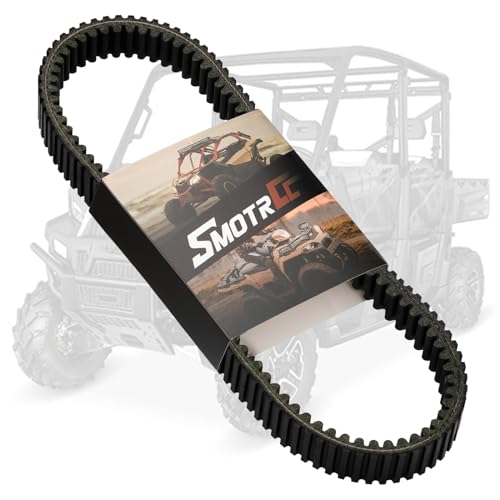


A shredded CVT drive belt is the number-one thing that strands a Polaris RZR or Ranger, and it is almost always preventable. The belt is a wear part — it is supposed to be the sacrificial link that saves your clutches and engine — but most belts die young, and they die for reasons you control: too much heat, too much load, a skipped break-in, or water in the belt box. This guide covers why Polaris belts fail, how to make the next one last, how to inspect and change one, and the belt-box parts that quietly protect it. For a fresh belt and the seals and tools that go with it, each section links the Amazon Powersports selection; for OEM belts by part number, the eBay Motors buttons above search live listings.
How the CVT and the belt actually work
Your Polaris has no gearbox with fixed ratios. It has a CVT — a rubber drive belt riding between two variable-width pulleys (the primary clutch on the engine, the secondary on the transmission). As engine RPM climbs, the primary squeezes shut and forces the belt to ride higher, changing the effective gear ratio smoothly. The belt is not just a connector; it is the friction surface doing the shifting. That is why belt condition, and belt heat, determine how the whole machine drives.
Two things follow from that. First, the belt is always slipping a little by design, which makes heat. Second, anything that makes it slip more — a slick new belt, water, oil, or the clutches spinning fast while the machine barely moves — makes far more heat, and heat is what kills belts.
Why belts fail (the real causes)
Belts rarely “just wear out.” They get cooked:
- Low-range abuse. Crawling in mud, rocks, or a heavy tow with the engine screaming and the machine barely moving spins the clutches at high RPM while the belt gets no airflow. This is the classic belt-melter.
- Big tires, wrong clutch. Taller, heavier tires raise the effective gearing and force the belt to slip longer before it grabs. Jumping up in tire size without a matched clutch kit is a belt-eating combination — the clutch kit buyer’s guide covers how to re-tune for tire weight and elevation.
- No break-in. A slick new belt run hard glazes over instead of scuffing in, then slips and overheats for the rest of its short life.
- Water and debris in the belt box. Water makes the belt slip instantly; grit sandpapers it. Both destroy belts fast.
- Altitude. Thinner air at elevation reduces engine power and changes how the clutches engage — another reason to match the clutch to where you ride.
If you are chasing repeat failures, see the belt section in the common problems and the parts that fix them guide — the fix is usually the cause, not another belt.
Break in every new belt
This is the cheapest belt-life insurance there is, and the most-skipped step. A new CVT drive belt comes with a slick molded surface that must seat to the clutch sheaves before hard use. For the first 25 to 50 miles:
- Easy on the throttle — no wide-open pulls.
- No heavy towing, deep mud, or sustained low-range crawling.
- Vary your speed so the belt rides across the full range of the clutches and scuffs in evenly.
Ten minutes of restraint here is worth thousands of miles later. A belt run hard from mile one glazes, slips, and dies early — and it takes your money with it.
How to inspect a belt
Pull the belt-box cover and look at the belt at every oil change and after any hard, wet, or muddy ride. Replace it if you see:
- Glazing — a shiny, hardened, almost plastic-looking surface. This is a slipping belt.
- Cracks between the cogs, or missing cogs.
- Frayed or exposed cords on the edges.
- Narrowing past the service width listed in your manual (a caliper across the belt tells the truth).
A burnt-rubber smell, a hesitating or slipping launch, and rubber dust in the intake duct all say the same thing. When in doubt, change it — the belt is the cheapest part in the drivetrain, and a belt that lets go at speed can crack a clutch cover and take out far more than itself.
Changing a belt on the trail
A belt swap is a roadside job once you have done it once. The clutches are spring-loaded and clamp the belt hard, so the one thing that turns a ten-minute fix into a knuckle-busting ordeal is not having the right tool. A clutch/belt spreader tool opens the secondary clutch so the old belt lifts out and the new one drops in without prying against the sheaves (which can nick them and shorten the next belt). Keep the tool and a spare belt in the machine — a shredded belt with no backup ends the ride, and one with no tool ends your patience.
While the cover is off, wipe the box clean of belt dust, and check the seals (next section) before you button it up.
Protect the belt box: seals and the drain plug
Half of “belt problems” are really belt-box problems. Two cheap parts do the protecting:
- The outer cover seal. A worn or hardened belt-box outer cover seal lets water and grit into the box on every crossing. Replace it if it is cracked or flattened — it is the gasket standing between a river and your belt.
- The drain plug and O-ring. The belt box has a Clutch Drive Belt Removal Tool For Polaris RZR RZR-4 XP Turbo… specifically so water can escape. Keep the plug and its O-ring in good shape, and use it — after a deep crossing, pull the plug, let the water drain, then re-seat it. A sealed, drained box is the difference between a belt that shrugs off a water hole and one that glazes the moment you hit it.
If you find oil rather than water in the box, stop and diagnose — that is usually a leaking clutch-side crank seal, and oil will destroy belts as fast as you can install them.
Carry a spare — always
The whole point of the belt being a wear part is that it fails instead of something expensive. That only helps if you can replace it where you are. Keep a fitment-matched spare belt and the removal tool in the machine at all times. Owners who ride hard — turbos, big tires, mud, towing — often run a severe-duty belt built for high heat, and keep the take-off OEM belt as the trail spare. Match the belt to your model, year, and engine — a RZR XP 1000 belt is not a Ranger belt.
How to buy
- New belts, seals, drain plugs, and tools: Amazon Powersports — see the clutch kits and maintenance categories, and the recommended parts below.
- OEM belts by part number, or severe-duty takeoffs: eBay Motors, via the search buttons above.
Do the boring things — break the belt in, keep the box sealed and drained, match the clutch to your tires and elevation, and carry a spare — and the drive belt stops being the part that ends your ride. For the full service picture around it, see the maintenance schedule and parts checklist.
Shopping used or OEM? Try eBay Motors
Live listings for the parts covered in this guide — prices set by the seller.
Recommended Parts for This Guide
Polaris Off Road CVT Drive Belt, for RZR, Ranger, Xpedition - 3211186
111 owner reviews
Polaris Off Road CVT Drive Belt, for RZR, Ranger, Xpedition - 3211186. Keep your Polaris running ride after ride with this routine service part.
- Keeps your Polaris running
- OE-quality replacement
3211172 Heavy Duty Drive Belt for Polaris RZR 900 XP Ranger 900 XP | Fit for RZR 1000 XP4 Trail S 1000/ General XP 1000/Ranger 1000 XP, Replaces OME Part 3211180 3211196 27C4159, Heat Resistant
67 owner reviews
3211172 Heavy Duty CVT Drive Belt Fit Polaris RZR XP 900 1000 XP4 General XP 1000 Ranger Trail S1000 Ranger 900 1000 XP Replaces OME Part 3211180 3211196 27C4159. Keep your Polaris running ride after ride with this routine service part.
- Keeps your Polaris running
- OE-quality replacement
Belt Box Outer Clutch Cover Seal Replacement for RZR RANGER ACE | Replacement for 2014-2020 Polaris RZR 900S XP 1000 Ranger XP 900 570-4 Crew ACE General 1000 Black
154 owner reviews
Belt Box Outer Clutch Cover Seal Replacement for RZR RANGER ACE | Replacement for 2014-2020 Polaris RZR 900S XP 1000 Ranger XP 900 570-4 Crew ACE General 1000 Black. Clutch tuning for big tires, elevation, and lift on your RZR, Ranger, or Sportsman.
- Restores power with big tires
- Tuned for elevation & lift
Clutch Drive Belt Removal Tool For Polaris RZR RZR-4 XP Turbo RS1 Ranger XP 1000 Replace 2875911
190 owner reviews
Clutch Drive Belt Removal Tool For Polaris RZR RZR-4 XP Turbo RS1 Ranger XP 1000 Replace 2875911. Clutch tuning for big tires, elevation, and lift on your RZR, Ranger, or Sportsman.
- Restores power with big tires
- Tuned for elevation & lift

3PCS T-Handle Clutch Drive Belt Removal Tool, Heavy Duty 42CrMo Clutch Spreader Belt Change Tool,Zinc Plated,Replace OEM 2875911 for Polaris RZR RZR-4 XP Turbo RS1 Ranger XP 1000
15 owner reviews
3PCS T-Handle Clutch Drive Belt Removal Tool, Heavy Duty 42CrMo Clutch Spreader Belt Change Tool,Zinc Plated,Replace OEM 2875911 for Polaris RZR RZR-4 XP Turbo RS1 Ranger XP 1000. Clutch tuning for big tires, elevation, and lift on your RZR, Ranger, or Sportsman.
- Restores power with big tires
- Tuned for elevation & lift
Frequently Asked Questions
Why does my Polaris RZR keep burning drive belts?
Do I have to break in a new Polaris drive belt?
Can I run an aftermarket drive belt or do I need OEM?
How do I know when to replace my Polaris drive belt?
Why is there water or oil in my clutch belt box?
Related Reading
Other pages in the Polaris reference library that cover the same parts as this guide.
Essential Polaris RZR & Ranger Trail-Repair Spares to Carry
The get-home spares kit for your Polaris RZR, Ranger, or Sportsman — a spare CVT belt, wheel bearings, ignition coil, body fasteners, and the few small parts that keep a trail-day mishap from becoming a long walk out.
Read itPolaris Part Number Lookup: How to Find the Right OEM Number for Your RZR, Ranger or Sportsman
The part number — not the part name — is what actually gets you the right component. Here's how to identify your exact machine, read a Polaris exploded parts diagram, handle superseded numbers, and a reference table of the OEM numbers that come up most on RZR, Ranger, General and Sportsman machines.
Read itThe Best Polaris RZR Accessories for Every Build
A curated roundup of the best Polaris RZR accessories — from wheels and tires to winches, skid plates, lighting, and clutch kits — for trail, rock, and desert builds on any budget.
Read it